WOTSO has always done things differently – and the interior design of its coworking spaces across the suburban and regional hubs of Australia and New Zealand is no exception.
They are bright, engaging, resourceful and full of local character, created inhouse by a dedicated crew.
It’s a hands-on process that has evolved organically since the first WOTSO opened at Neutral Bay in 2014, says CEO Jessie Glew, who has been involved from the beginning.
Designing for locals
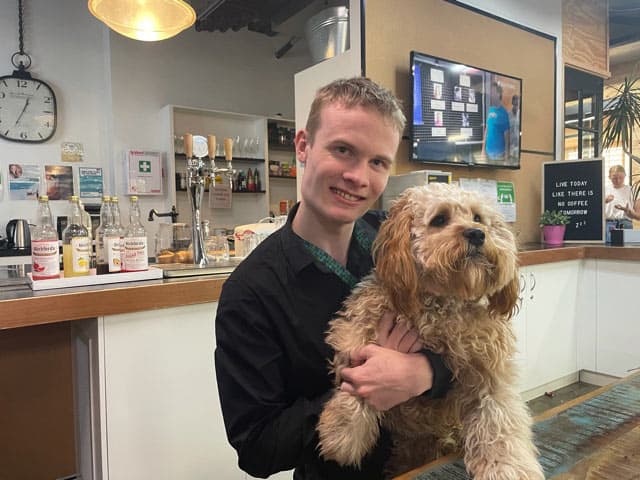
“We’ve always wanted to make our coworking spaces places where locals feel at home whether they’re in a business suit or thongs and shorts while providing a professional environment with everything they need to get the job done,” Glew says.
In the beginning, WOTSO’s do-it-yourself mantra was met with some scepticism but members embraced the earthy approach.
Now with 43 locations across Australia and New Zealand, WOTSO isn’t trying to be everything to everyone. Instead, each space taps into the character of its local neighbourhood, creating an environment that feels genuine and draws in a diverse mix of businesses. So, what is WOTSO’s design mojo?
Colour, texture and vibrant art
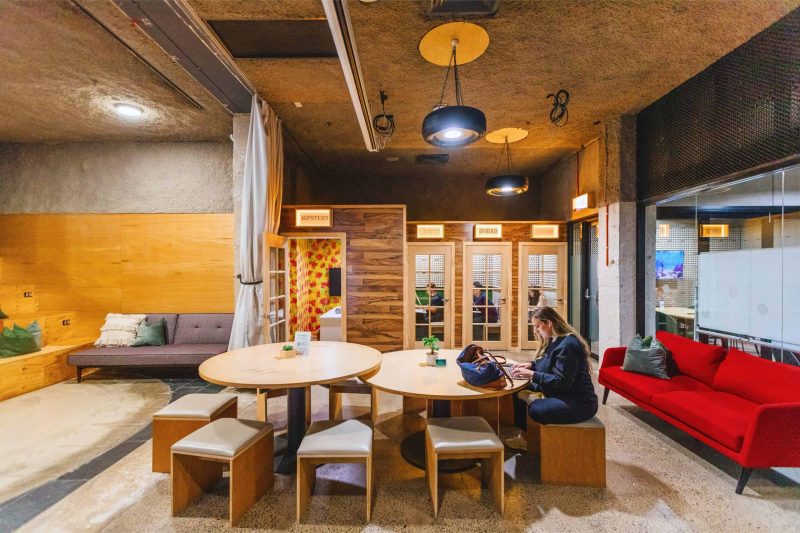
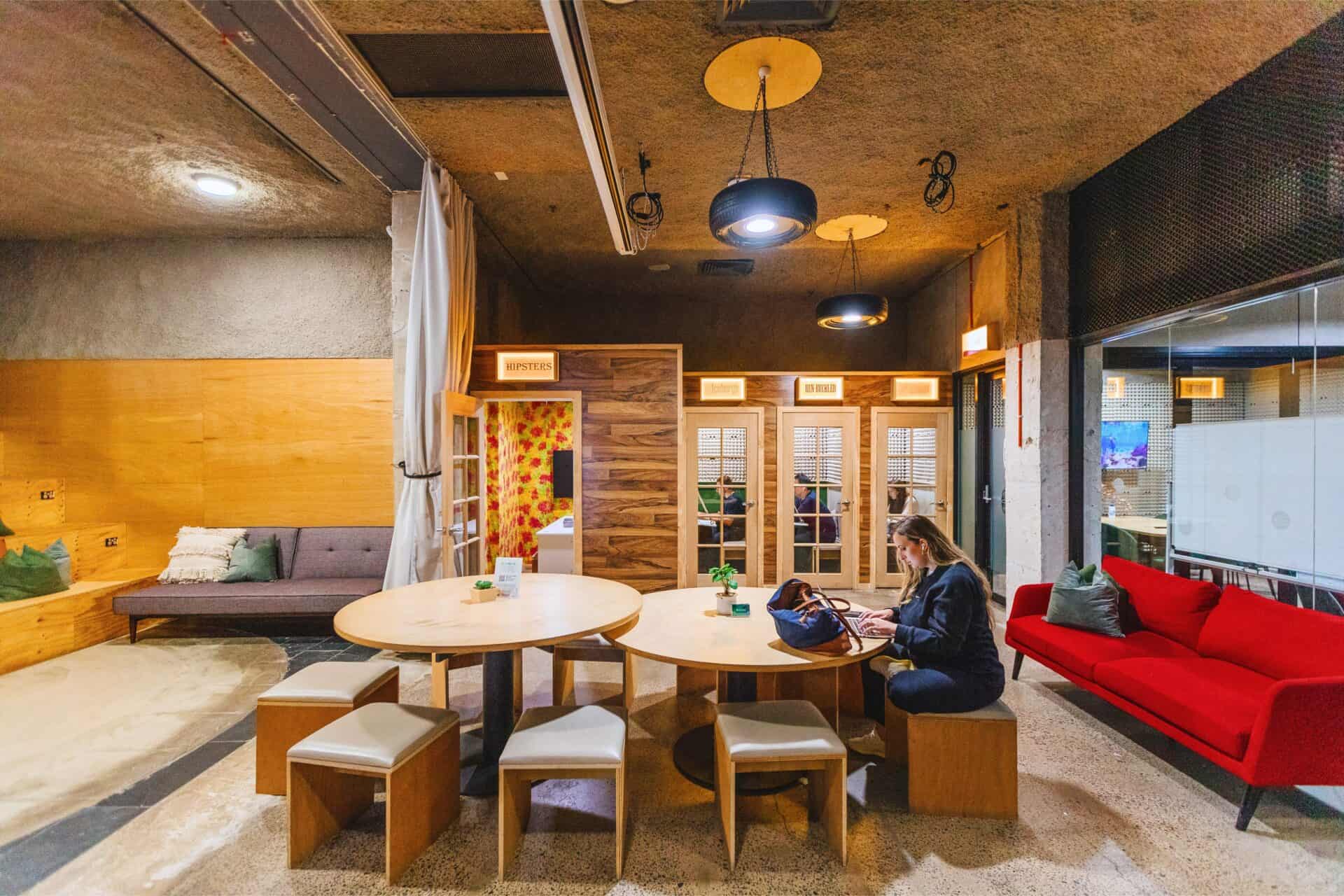
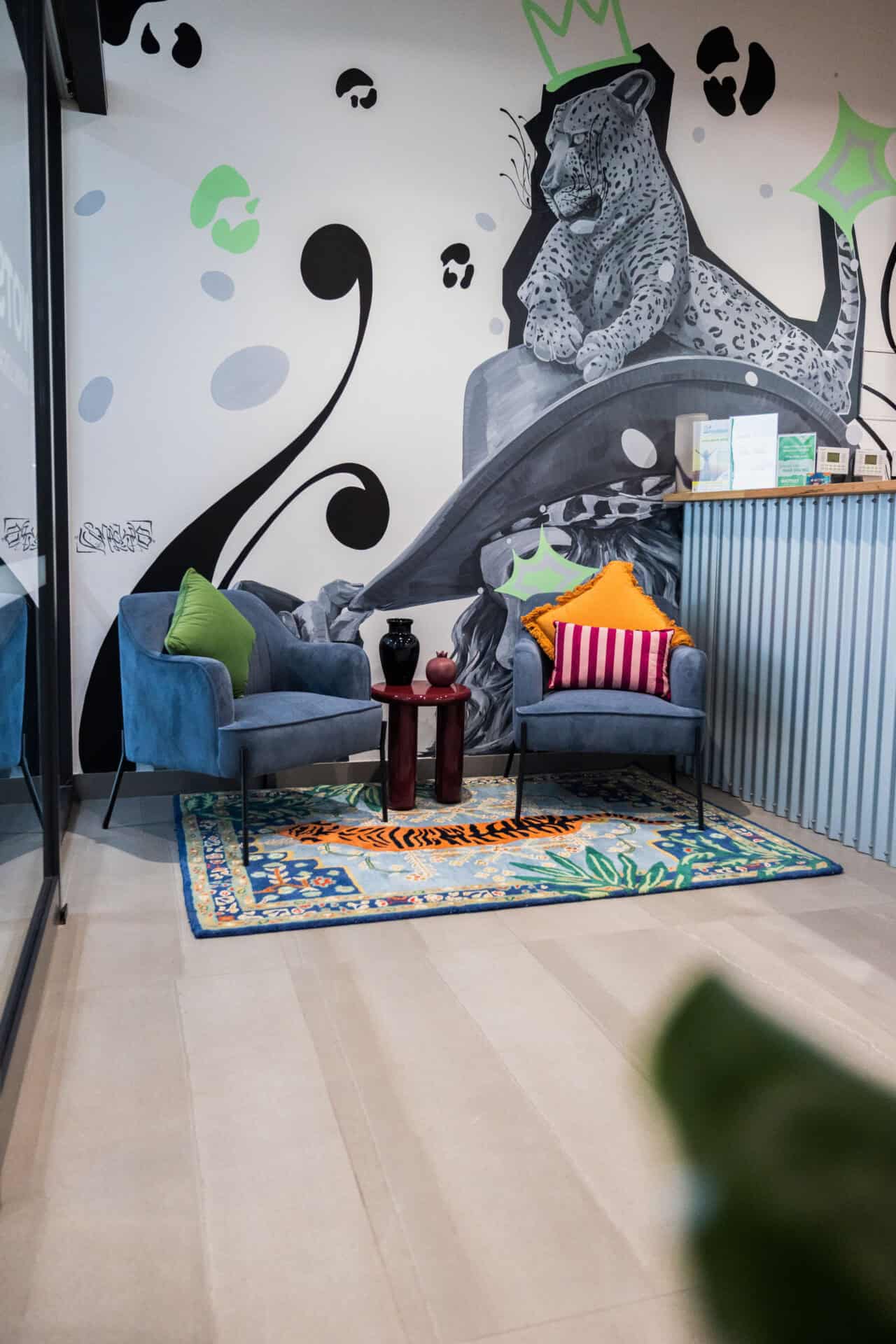
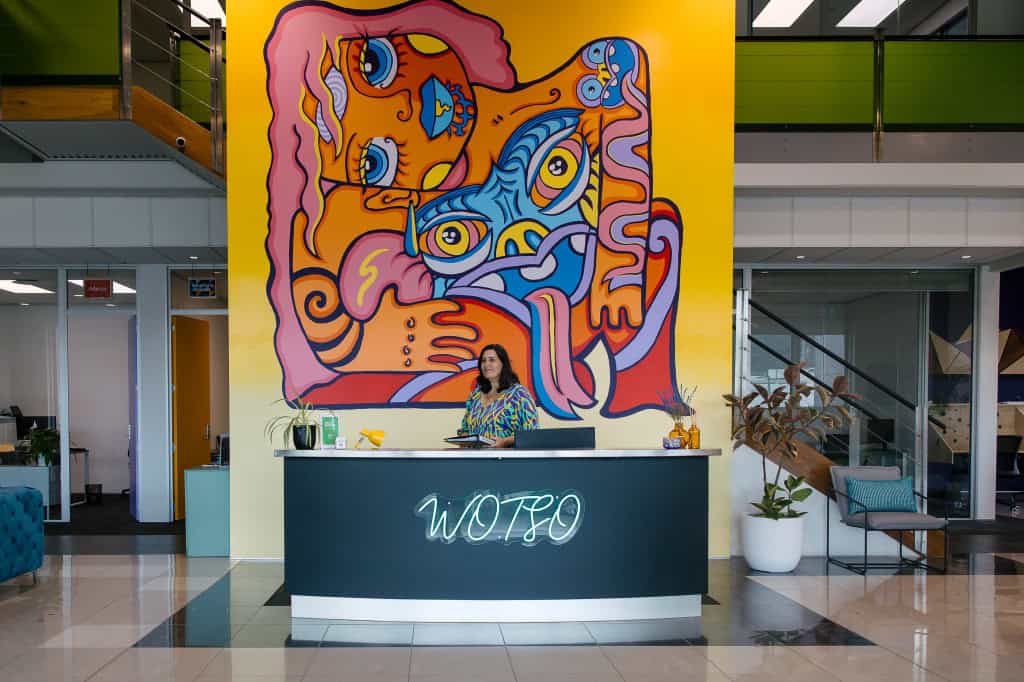
These are the obvious interior design signatures. Every WOTSO is bright and friendly, often with bold use of colour but also a sense of warmth through lighting and materiality.
There is always a mural, most often created by a local artist telling local stories.
WOTSO Whangarei in Northland, New Zealand, where a dramatic artwork painted by local artist Josie Selkirk hangs above the reception desk, and a mural created by Wheku Design runs 50 metres along the boundary wall, is a great example.
Texture is also integral to WOTSO workspaces through clever and sometimes surprising use of timber from an expert team of carpenters and builders who have been working with WOTSO for many years.
Upcycling and recycling.
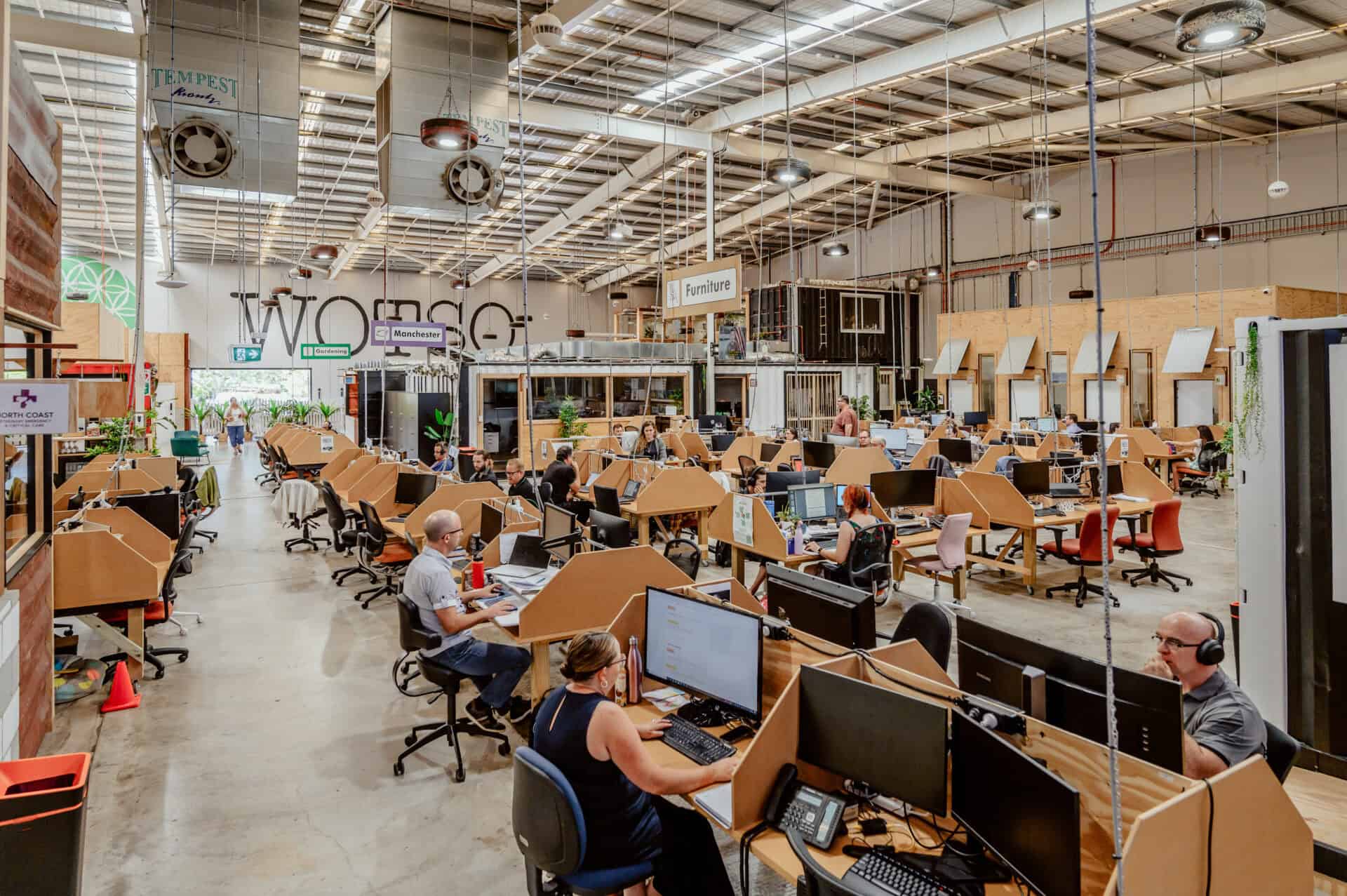
A sense of place and past is delivered by using upcycled and recycled material in every fitout, a strategy that saves money, reduces unnecessary waste and adds character in unexpected ways.
Look no further than the unloved shipping containers repurposed as self-contained offices at the WOTSOs in Jamisontown, Sydney, and Sippy Downs on Queensland’s Sunshine Coast.
Whatever doesn’t work in one location is kept for another such as the outside tables at CookSpace, crafted from timber recovered from the former (and repurposed) Arnotts biscuit factory at North Strathfield, part of which is now a WOTSO.
And when a new build is required, fully recyclable X-Frame framing technology is deployed to create private offices and meeting rooms that can be broken down and used again.
Organic design
Glew says there is no design template. “With our spaces we want to project a local personality, which varies based on what area you’re in, and the fitout we inherit,” Glew says.
“We don’t have a fitout playbook because you don’t know what you’re going to get in each of the spaces that gets handed over.”
She says it’s about coming in with an open mind and working out what’s best for the space.
“We then do a layout plan which has all the essentials and take that to a property meeting and get new ideas.
“Once that’s done the regional managers put together a look and feel book and take it from there.”
Design refined
NSW Regional Manager Paula Dayeh has worked on nine fitouts and says the process is one of continual refinement.
“Blacktown, Zetland and Macarthur Square were complete blank canvases. That’s when we look at what we think has worked well in other sites and incorporate the best iteration of those spaces,” Dayeh says.
Then there is the challenge of adapting existing fitouts, an increasingly common occurrence as WOTSO partners with more landlords
“We really like to juxtapose the final product with what it used to be. We like it being really, intensely different,” says Dayeh.
Always practical
But not too different. Every WOTSO is open 24/7 for members, has a mix of coworking space and private offices, well-equipped meeting rooms, a kitchen stocked with drinks, fruit and snacks, staffed reception, office services and business grade internet.
For all the creativity, the end goal is always to create a place where members feel comfortable, work effectively and can build community.